


March 19, 2026
What Experienced Buyers Ask Before Buying an Online Business
The founder makes all decisions, solves problems, talks to customers, manages the team and keeps the business moving forward.At first it can even look like a strength. But over time founder dependency becomes a serious risk. When too much knowledge, authority and control remain with one person, the business becomes harder to scale, harder to manage and significantly less attractive to buyers or investors. Instead of running like a real system, it operates as an extension of the founder. This creates dangerous bottlenecks. If every important decision needs the founder’s approval, progress slows down. If only the founder knows how key processes work, the team stays dependent. If the business cannot function smoothly without the founder’s daily involvement, the whole company becomes fragile. That is why founder dependency is not just an operational problem — it is also a major business valuation issue.
In this model the founder becomes the system. It may work for a while, but it sets hard limits. Growth cannot outpace one person. Teams lose confidence because they are trained to wait instead of act. And if the founder steps away — even briefly — performance drops immediately. For any potential buyer this creates obvious and serious risk.
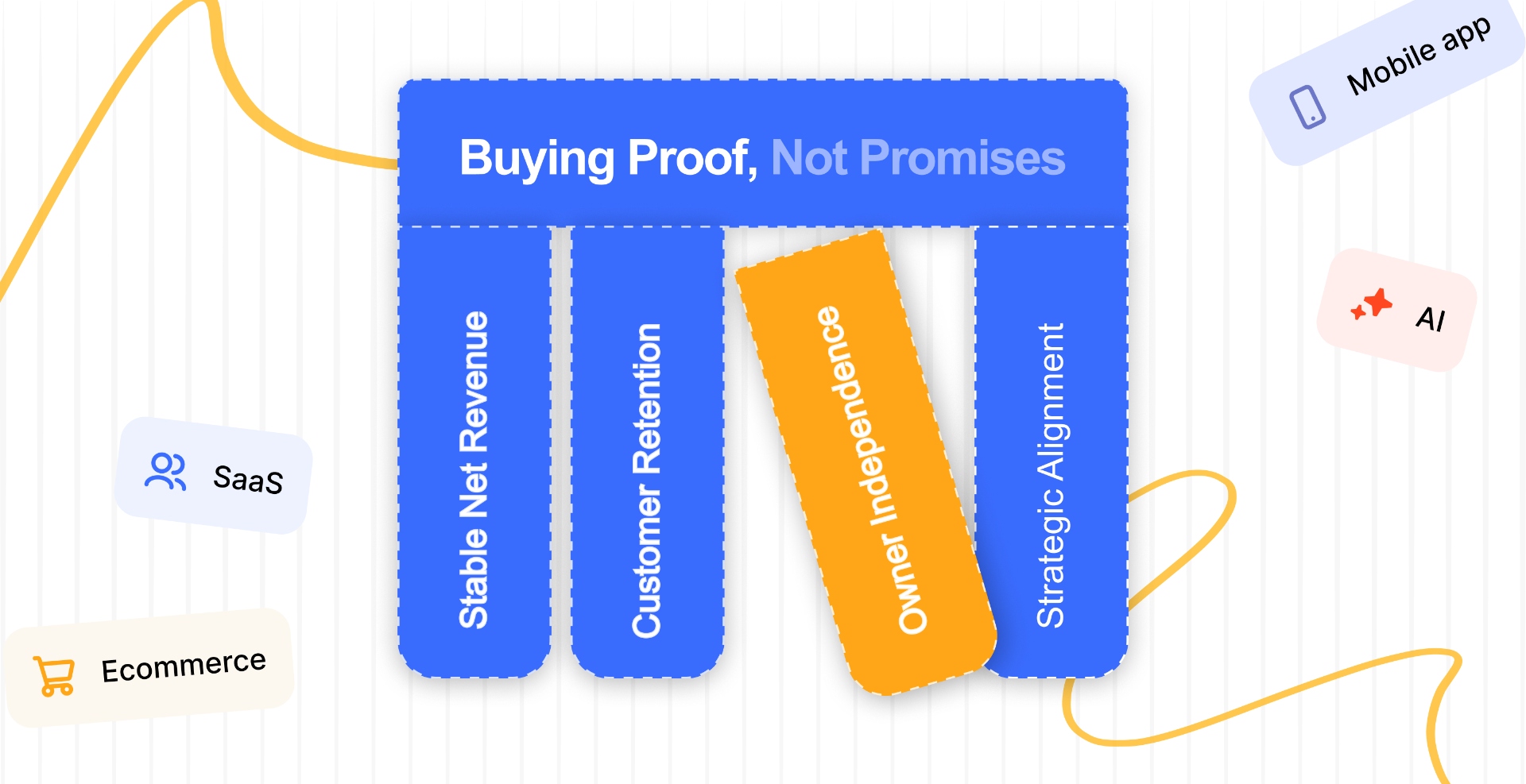
A business is far more valuable when it can continue working without the founder at the centre of every action. Without that independence the company looks less like a real asset and more like a personal job built around one person.
A valuable business operates consistently, grows predictably and survives transitions without drama. Founder dependency weakens all three pillars at once. When a buyer or investor sees that the founder controls everything, they immediately spot “key person risk.” This is one of the most common [Pain Points in Risk Assessment: Why Buyers Struggle to Make Confident Decisions]. The business may struggle after the sale, during a leadership change or even during a short founder absence.
Simply put, the more the business depends on the founder, the less transferable it feels. And transferability is one of the biggest drivers of real business valuation in online marketplaces.
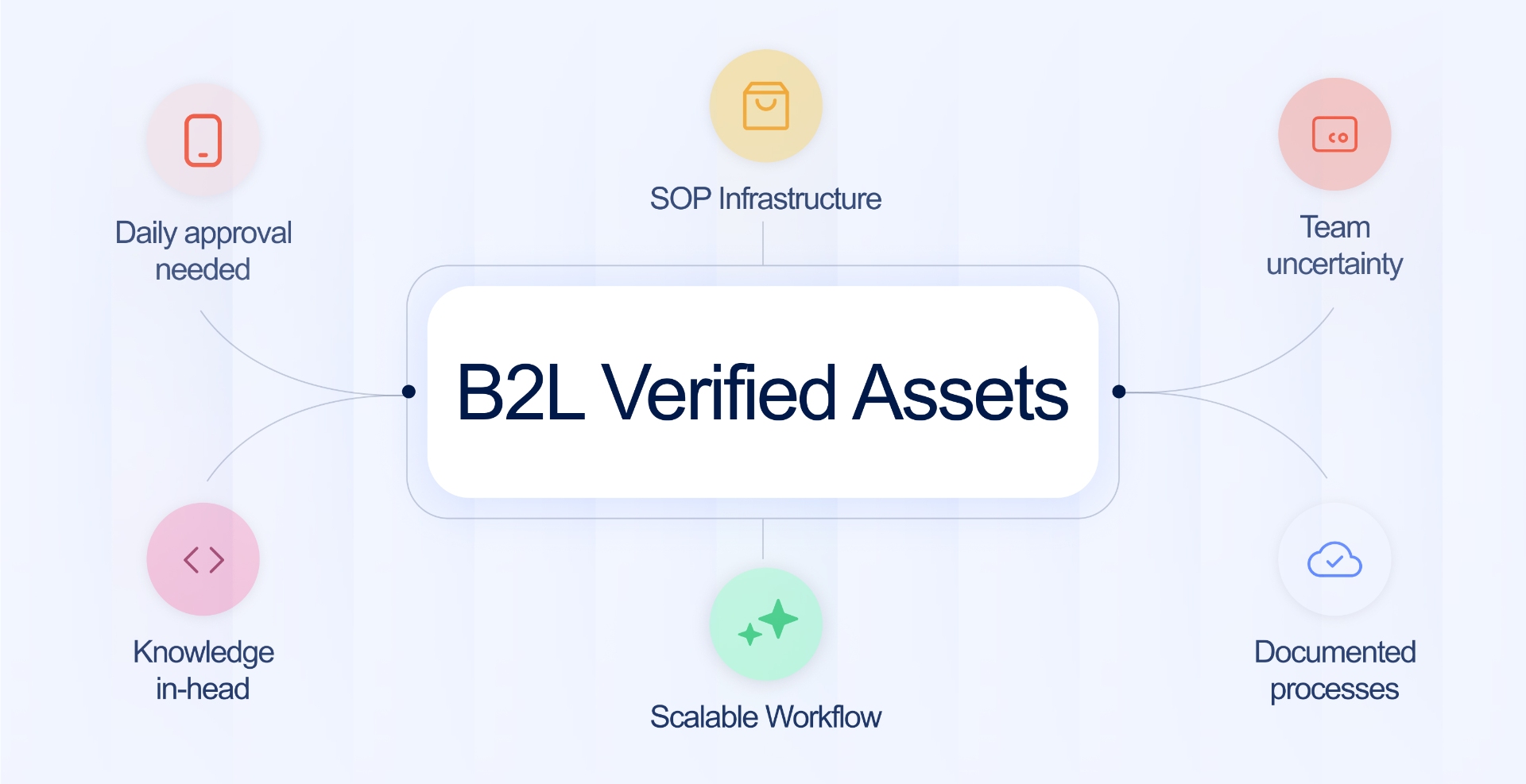
This is exactly where Standard Operating Procedures (SOPs) become a game-changer. SOPs turn personal knowledge into company knowledge. They document exactly how recurring tasks are performed so the business can run consistently — even when the founder is not involved. Instead of relying on memory or constant supervision, the team simply follows clear, proven systems.
Most importantly, SOPs shift the business from founder-led to system-led. That single shift changes everything.
Good SOPs are not just documents for the sake of documents. When created properly they build real structure that makes the business more resilient and more valuable.
When these processes are documented, the founder stops repeating the same explanations over and over.
One of the biggest advantages of SOPs is that they dramatically reduce operational chaos. Without systems, businesses rely on informal chats, memory and last-minute firefighting. It feels fast at the beginning, but it creates instability as the team grows.
This creates real accountability and makes the company much easier to manage at scale. A business that runs on systems is far easier to grow than a business that runs on founder energy. In fact, implementing SOPs is one of the fastest ways to move from chaotic growth to [Predictable Revenue vs Chaotic Growth in Online Businesses].
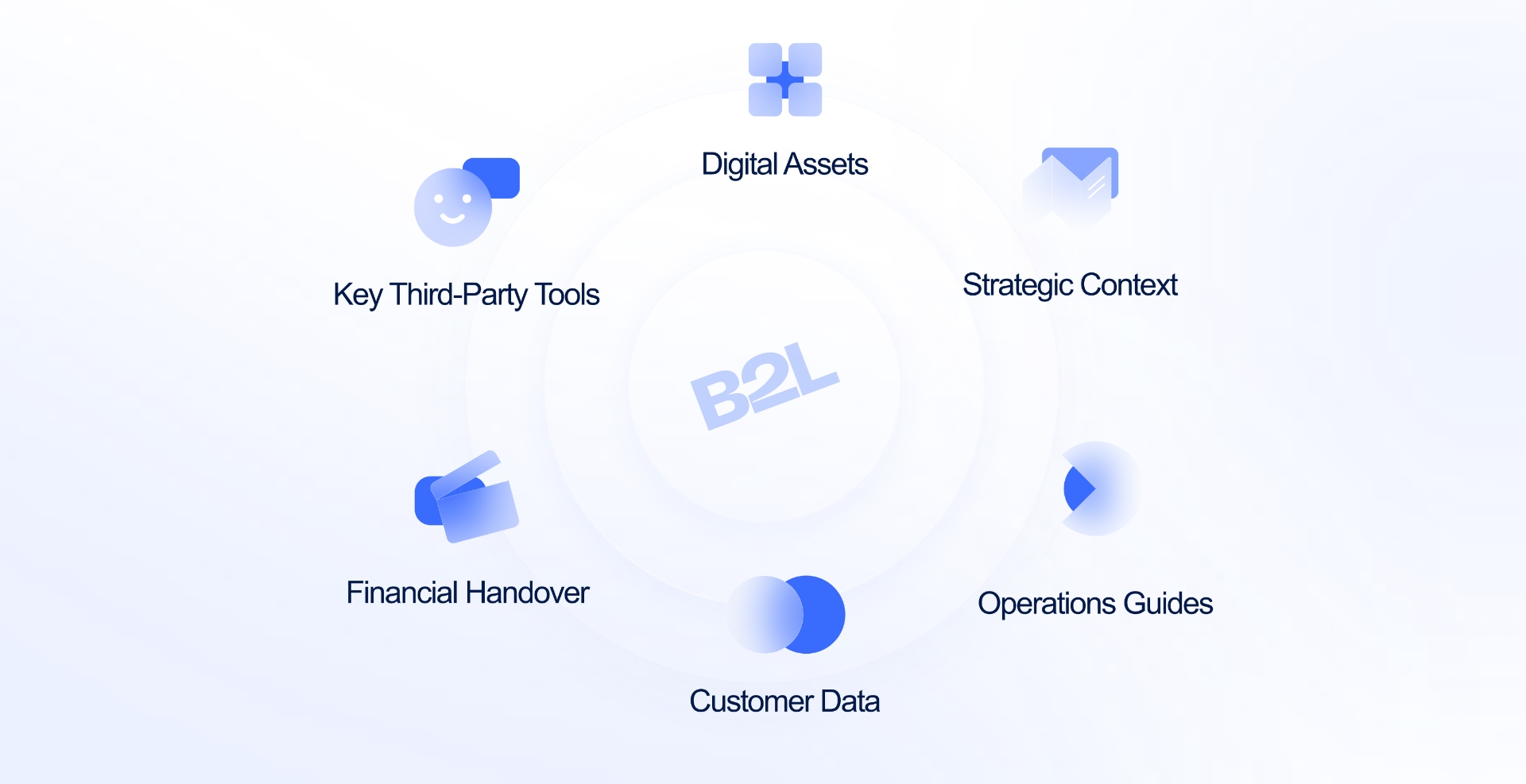
SOPs increase value because they improve both efficiency and buyer confidence. They protect revenue by cutting errors and delays. They lower training costs because new people can follow documented processes instead of asking the founder. They make delegation effortless, freeing leadership to focus on growth instead of daily operations. Most importantly, they make the business far more attractive during any future sale or transition. SOPs are an essential part of any solid handover process — [The Essential Handover Checklist When Selling an Online Business]. Buyers want to see that the business will keep running smoothly after the ownership change. Well-written SOPs prove that the company already has structure, discipline and repeatable processes. Hidden founder knowledge becomes a real transferable asset — and transferable assets are exactly what create higher valuations and stronger online businesses.
Founder dependency remains one of the most common hidden risks in growing online businesses. It may feel efficient in the short term, but over time it creates bottlenecks, reduces resilience and directly lowers business value when you decide to scale or sell. The solution is not for the founder to work harder. The solution is to build systems that let the business operate successfully without the founder at the centre. SOPs do exactly that. They turn scattered personal knowledge into repeatable company processes, support real delegation, boost team confidence and make the entire business stronger, more scalable and significantly more valuable. In the end, the most powerful businesses are those that no longer depend on any single person to keep everything moving. Start building your SOPs today — and tomorrow your business will be ready for growth, investment or a successful exit.

.svg)


.svg)
.svg)
.svg)
