


March 19, 2026
What Experienced Buyers Ask Before Buying an Online Business
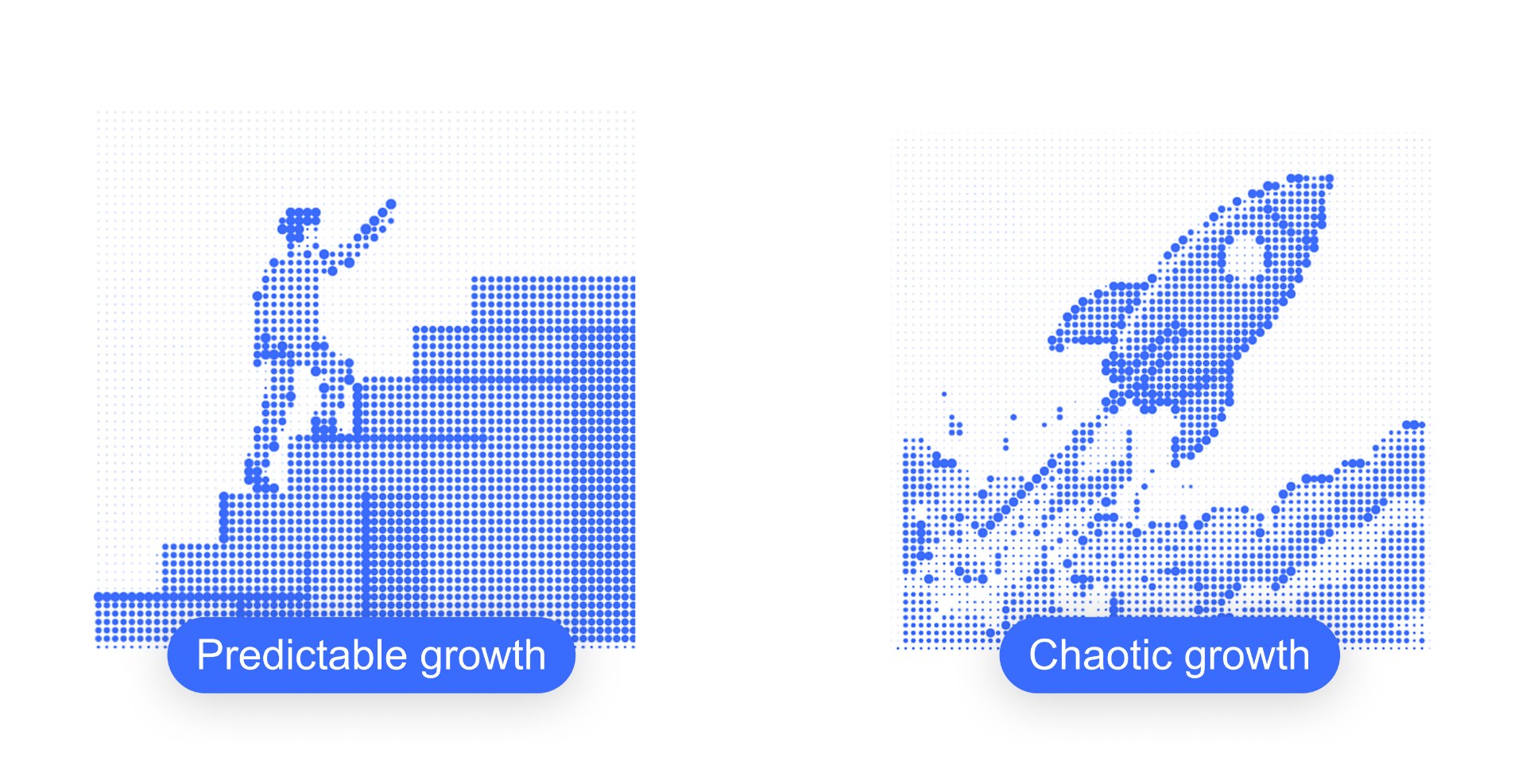
Many founders focus on scaling quickly, capturing market share, and increasing revenue as fast as possible. But rapid expansion does not always mean long-term success. A growing conversation among founders and investors highlights the difference between predictable revenue and chaotic growth. While both approaches can generate impressive numbers in the short term, they create very different types of businesses. Understanding this difference is important for anyone building, buying, or evaluating an online company.
Predictable revenue refers to income that is generated through repeatable, reliable systems. Instead of depending on occasional spikes or aggressive expansion, predictable revenue comes from structured processes that consistently produce results. These systems connect sales, marketing, product development, and customer success into a stable cycle.
In these businesses, growth happens because the underlying system works. Customer acquisition is measurable, retention is stable, and revenue forecasts become increasingly reliable.
Predictable revenue allows founders to plan ahead, invest with confidence, and scale without constant uncertainty.
Chaotic growth is almost the opposite. It often appears during periods of rapid expansion when companies prioritize speed above structure. Revenue may increase quickly, but the underlying systems are not prepared to support the scale.
At first, chaotic growth can feel exciting. Metrics move upward, attention increases, and the company appears to be winning. However, the rapid pace often hides deeper problems. Teams become overwhelmed, processes break down, and financial efficiency declines. Over time, the complexity created by uncontrolled growth can make the business fragile.
Businesses built on predictable revenue tend to be more resilient. Because their growth is supported by systems, they can maintain performance even when market conditions change. Customer retention becomes easier to measure, and revenue forecasts become more accurate. Predictable models also help organizations scale in a healthier way. When systems are clearly defined, teams can deliver consistent results even as the company grows. Processes become repeatable, and new employees can integrate more easily into the operation.
This structure transforms growth from something unpredictable into something engineered. Instead of hoping the next month will perform well, companies with predictable revenue understand exactly what drives their results.
Chaotic growth may generate impressive numbers, but it also introduces significant risks. One of the biggest challenges is operational complexity. As companies grow quickly without structured systems, small problems become larger bottlenecks.
Another major risk is financial instability. If growth depends on aggressive spending or temporary trends, revenue may collapse when those conditions change. In many cases, businesses that grow too quickly discover that their internal systems were never ready to support that scale.
Recent technological changes, particularly in automation and artificial intelligence, are shifting how businesses approach growth. In the past, companies often needed large teams and heavy investment to scale their products. Today, smaller teams can build efficient systems that generate consistent revenue without massive expansion. This shift encourages founders to focus on operational efficiency instead of pure growth speed.
Companies that combine automation, lean operations, and recurring revenue models can often reach significant scale while maintaining stability. The result is a business that grows through structure rather than chaos.
This does not mean growth should be avoided. Fast expansion can still be valuable when it helps a business capture an opportunity or establish a strong position in the market. But the most successful companies eventually transition from rapid experimentation to structured systems. That transition is what separates temporary success from sustainable businesses.
The goal is not to eliminate growth, but to turn growth into something repeatable. When revenue becomes predictable, the company gains the ability to scale without losing control.
Predictable revenue and chaotic growth represent two very different paths for online businesses. Chaotic growth may produce short bursts of impressive results, but it often creates instability and hidden risks. Predictable revenue, on the other hand, builds long-term strength through systems, efficiency, and repeatable performance. For founders, investors, and buyers, the lesson is clear.
The most valuable businesses are not the ones that grow the fastest for a short time. They are the ones that build reliable systems capable of producing steady growth year after year. In the long run, stability almost always outperforms chaos.
.svg)


.svg)
.svg)
.svg)
