



March 19, 2026
What Experienced Buyers Ask Before Buying an Online Business
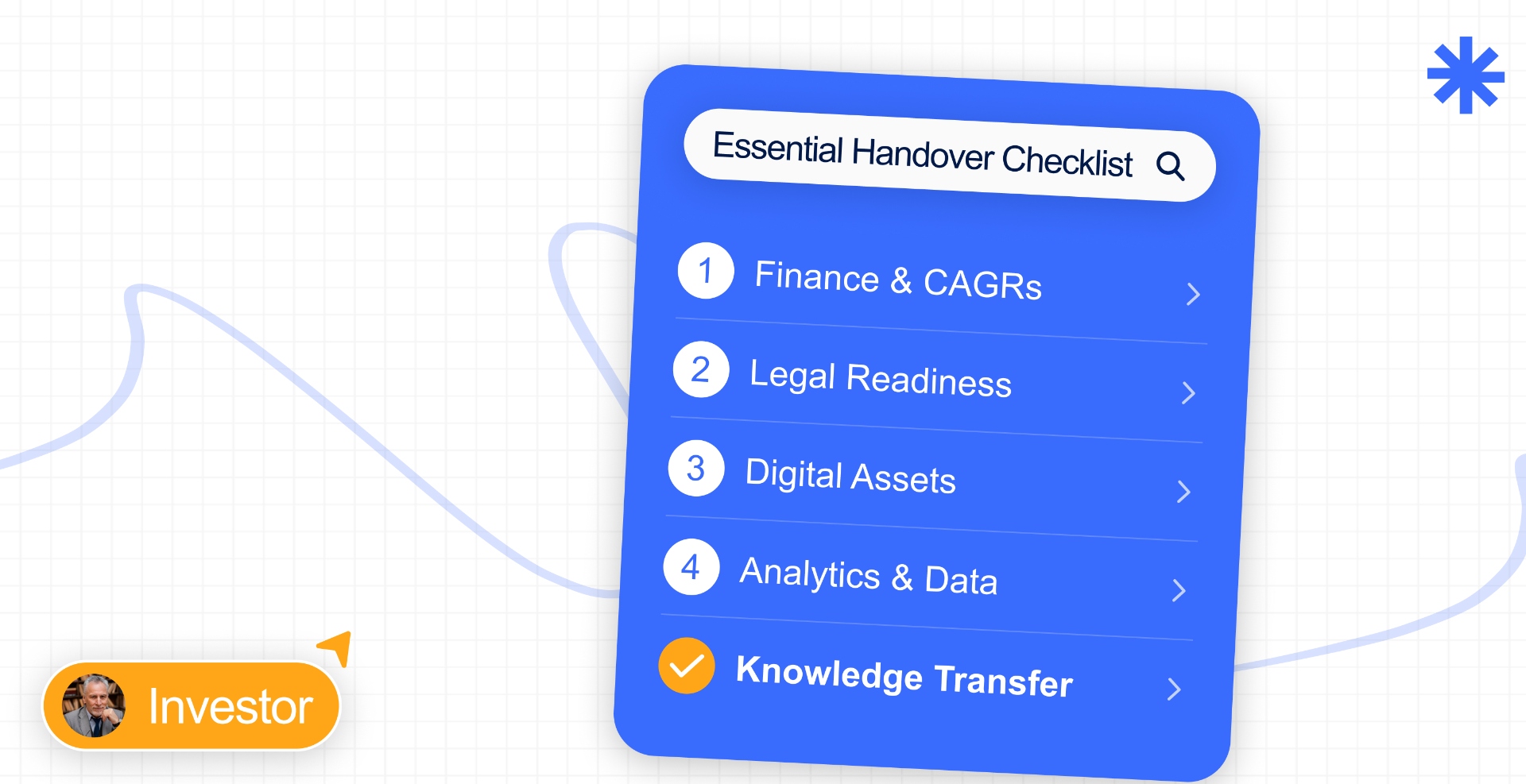
Without proper preparation, even promising deals can collapse during due diligence or become difficult after the transaction. Missing documentation, unclear financial records, or poorly documented processes often create uncertainty for buyers and slow down the entire process. This is why experienced founders prepare their businesses for sale long before listing them. A structured handover checklist ensures that the transition is clear, organized, and efficient for both sides. Below are the key areas every seller should prepare in advance.
Financial transparency is one of the most important factors in any business sale. Buyers want to understand how the business generates revenue, how stable that revenue is, and whether the numbers reflect sustainable growth. When financial records are disorganized or incomplete, trust immediately decreases.
Clean financial records help buyers evaluate the business quickly and reduce the risk of disputes during negotiations.
Legal readiness is another critical step in preparing for a sale. Buyers carefully review contracts and ownership rights to ensure there are no hidden liabilities. Missing or unclear legal documentation can delay the transaction or reduce the purchase price.
For online businesses that collect user data, proper compliance with privacy regulations is especially important. Buyers want assurance that customer data can be transferred legally and securely.
One of the biggest risks for buyers is founder dependency. If the business can only run when the seller is involved, it becomes difficult to transfer operations successfully. This is why documenting processes is essential before selling.
Clear documentation shows that the business can continue operating smoothly after the ownership change.
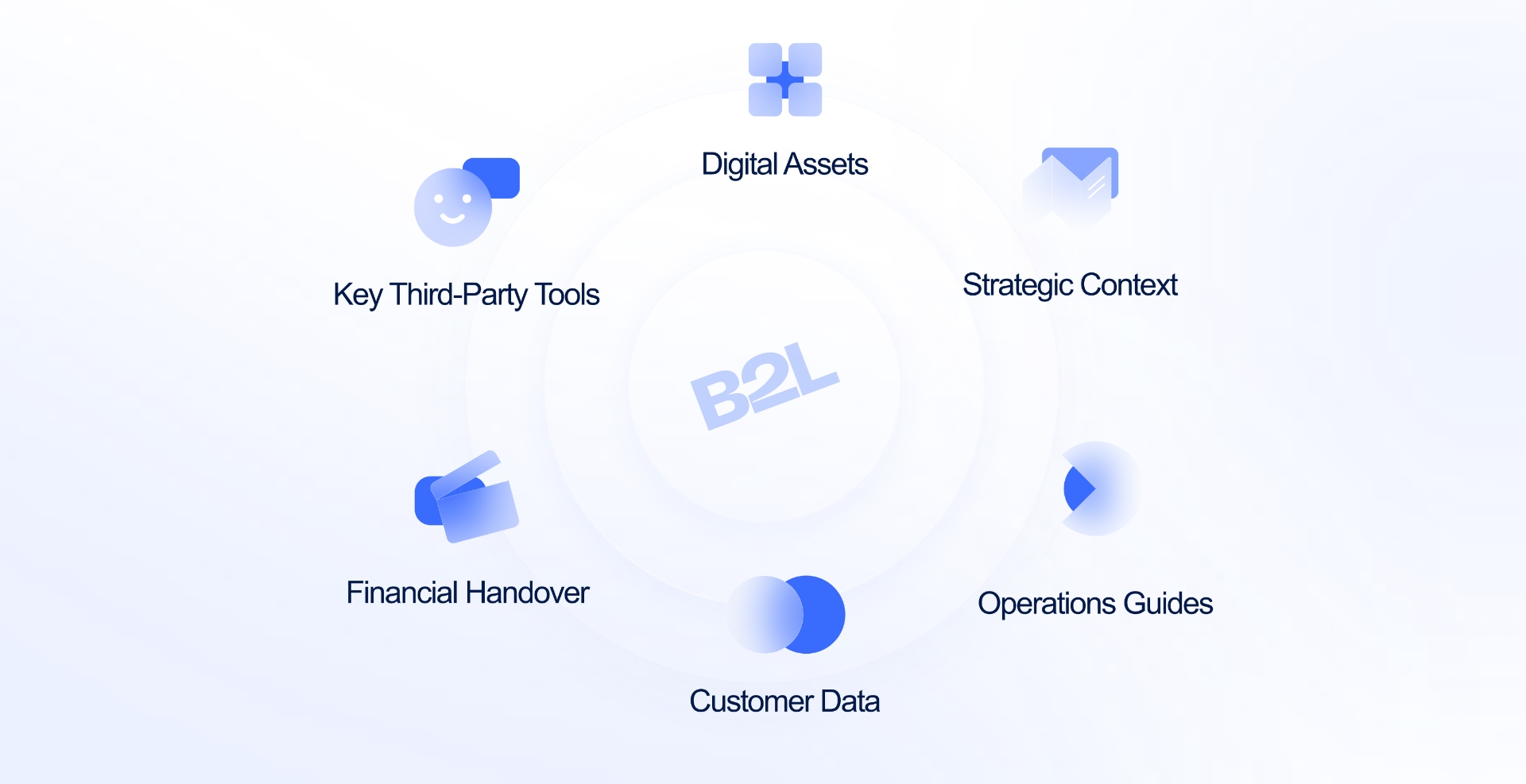
Online businesses rely heavily on digital infrastructure. During the handover process, all technical assets must be transferred safely and efficiently.
Creating a clear list of all tools and platforms used by the business makes the transition easier for the buyer.
Proper access management is also important. Sensitive accounts should only be transferred once the transaction is finalized.
Data provides valuable insight into how the business performs. Buyers often review analytics to understand user behavior, traffic sources, and growth patterns. This information helps them evaluate whether the business can continue expanding after the purchase.
Providing organized analytics dashboards allows buyers to assess the opportunity with confidence.
Even when processes are documented, buyers often need guidance during the transition period. A structured knowledge transfer plan helps the new owner understand how the business operates and how to manage daily activities.
Many transactions include a transition period where the seller provides support for several weeks or months after the sale.
The handover process usually follows several stages.
Preparation phase:
The seller organizes documents, systems, and financial records before listing the business.
Due diligence phase:
The buyer reviews all information and verifies the business performance.
Transition phase:
Accounts, assets, and processes are transferred, and the buyer receives training.
Breaking the process into clear stages reduces confusion and keeps both parties aligned throughout the deal.
A successful business sale depends on preparation as much as negotiation. Sellers who organize financial records, document processes, prepare digital assets, and plan the transition carefully create a much smoother experience for buyers.
A strong handover checklist does more than simplify the transfer. It also increases trust, reduces deal friction, and helps protect the long-term success of the business after the sale.
In the end, the best sales are not just about closing the deal-they are about ensuring the business continues to thrive under new ownership.

.svg)


.svg)
.svg)
.svg)
