


March 19, 2026
What Experienced Buyers Ask Before Buying an Online Business
A business may have attractive numbers, a clean presentation, and a compelling growth story. But for a serious buyer, one question always sits underneath everything else:
How much of this business is truly clear, verifiable, and transferable?
That is where operational transparency becomes so important. In marketplaces and acquisition environments, transparency is not just about being open. It is about making the business understandable. It means the buyer can see how revenue is generated, how assets are owned, how processes work, and where the risks actually are. When that clarity is missing, fear grows quickly. And most post-purchase fears come from exactly that problem: the buyer discovers too late that the business was harder to understand, transfer, or operate than it first appeared.
Operational transparency means the internal reality of the business is visible enough for someone else to assess it properly.
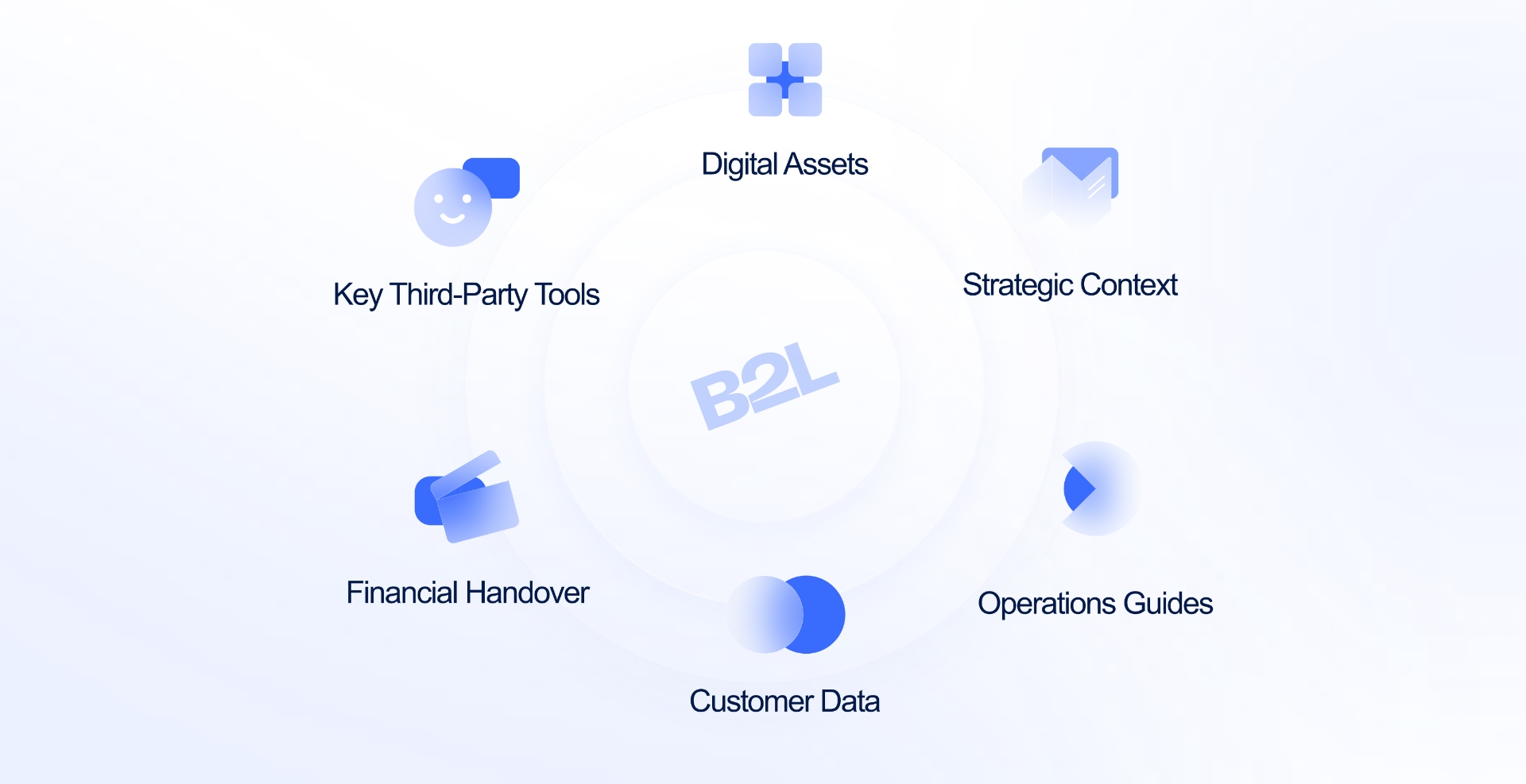
This matters because online businesses are often built on intangible assets. The value may sit in domains, payment systems, codebases, customer lists, subscriptions, ad accounts, automations, or audience trust. If those things are not clearly documented and verifiable, the business becomes harder to trust. A buyer does not just want to know that the business exists. They want to know how it works beneath the surface.
Marketplaces depend on confidence. Whether someone is buying software, a digital asset, or a full online business, the transaction only moves forward when the buyer believes the information is real and the risks are manageable. Operational transparency helps create that confidence because it reduces uncertainty.
In other words, transparency does not just make the deal feel safer. It makes the deal easier to evaluate. That is why it acts as a trust multiplier. The more visible and verifiable the business is, the easier it becomes for a serious buyer to move from interest to action.
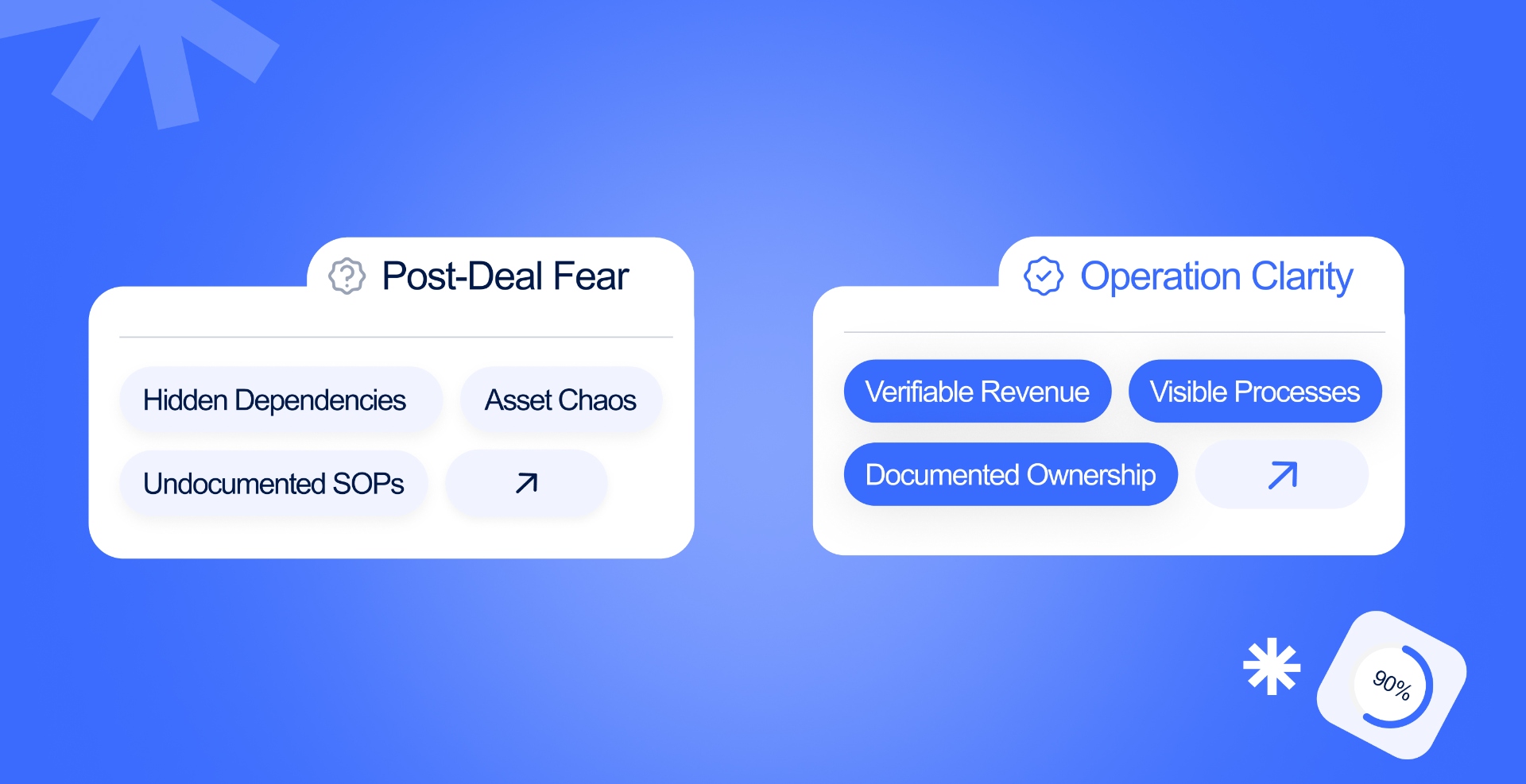
Post-purchase fear usually starts before the acquisition even closes. It appears when the buyer senses that some part of the business is unclear but cannot yet prove where the problem is. This often happens in online business deals because many critical details are easy to hide unintentionally or leave undocumented. The most common fears usually fall into a few categories.
A buyer may worry that the business only looks simple because the seller is carrying too much of the complexity personally. Once the transfer happens, hidden issues begin to surface:
These problems are expensive not just because they exist, but because the buyer did not see them clearly enough beforehand.
This is one of the biggest sources of post-close stress. If domains, code repositories, analytics tools, payment processors, or brand assets are not cleanly owned and transferable, the buyer may inherit confusion instead of control. Even a profitable business can become risky if key assets sit in personal accounts, unclear contracts, or disconnected systems.
Buyers also fear that trust may not transfer with the business. This is especially important when a brand depends heavily on the founder’s identity, a personal reputation, or direct customer relationships. If customers are loyal to the individual rather than the business itself, post-sale retention may weaken quickly.
A buyer may see strong headline revenue and still worry that the numbers are fragile underneath.
These fears become stronger when the business lacks transparent reporting and clear operational context.
The reason transparency matters so much is that it directly addresses these fears before they grow into bigger problems.
Transparency does not mean pretending the business is perfect. It means making weaknesses visible enough that both sides can understand them honestly.
This kind of clarity may feel uncomfortable at first, but it actually improves trust. Buyers are often more comfortable with a visible problem than with an invisible one.
Due diligence works best when the business is presented in a way that can be tested. Transparent operations make it easier for buyers to confirm what is true instead of relying on assumptions. That speeds up evaluation, reduces unnecessary suspicion, and creates a stronger foundation for pricing and transition planning.
A transparent business is easier to hand over because the next owner can actually understand what they are receiving.
The result is a much lower chance of post-sale surprises.
One of the biggest mistakes businesses make is treating transparency as a soft value instead of a practical advantage. In reality, operational transparency improves deal quality.
That makes transparency a competitive edge, especially in markets where buyers have many options and little patience for ambiguity. A business that is easy to understand is easier to trust. A business that is easier to trust is easier to buy.
Of course, transparency still needs structure. Not every detail should be exposed publicly, and not every internal process belongs in open view at the earliest stage. In some cases, too much exposure can create new risks, especially around strategy, security, or sensitive commercial information. That is why good transparency is not reckless openness.
It is controlled clarity. The goal is to reveal enough for the buyer to assess the business properly, without creating unnecessary vulnerability. In practice, that means using staged access, proper documentation, clean ownership records, and thoughtful communication throughout the process.
Operational transparency matters because it gives buyers something more powerful than a sales story. It gives them clarity. And clarity is what reduces post-purchase fear. Most buyer anxiety after an acquisition comes from things that were hidden, poorly documented, weakly transferred, or simply harder to understand than expected. Transparency addresses those issues before they turn into expensive problems. In online business deals, where so much value lives inside systems, data, and digital assets, this becomes even more important.
The businesses that create the most trust are not always the ones with the flashiest numbers. They are the ones that make their operations clear enough to believe in.
.svg)


.svg)
.svg)
.svg)
