


March 19, 2026
What Experienced Buyers Ask Before Buying an Online Business

The buyer now owns the asset, but ownership alone does not create stability. Systems still need to run, customers still need support, revenue still needs to continue, and the handover still has to work in practice. That is why the first month matters so much.
For most buyers, the biggest risk in this stage is not doing too little. It is doing too much, too fast. The smartest approach during the first 30 days is usually not aggressive optimization. It is structured stabilization.
Right after an acquisition, many buyers feel pressure to improve things immediately. They want to fix what looks inefficient, change the offer, redesign the funnel, replace tools, or introduce a better growth strategy. That instinct is understandable, but it can also be dangerous.
In the first 30 days, the main goal is not reinvention. The goal is to keep the business functioning smoothly while learning how it actually works from the inside. That means protecting continuity, preserving trust, and making sure revenue does not drop during the transition. A good first month should feel steady, not dramatic.
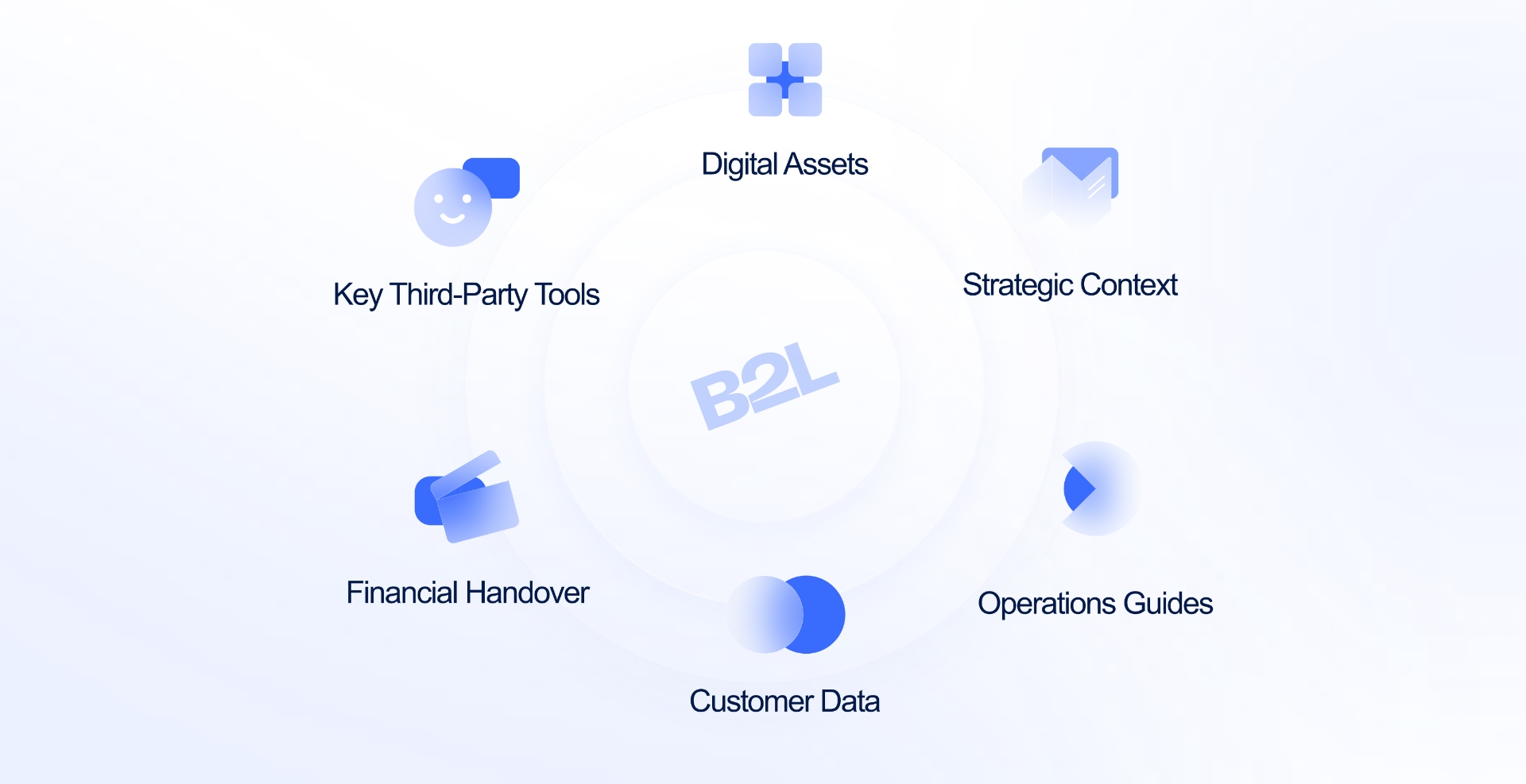
The first priority after closing is control. In online businesses, this means securing all critical assets and making sure nothing important remains vulnerable or inaccessible. The buyer should verify ownership, access, and functionality across the business.
This stage matters because even a small access issue can create immediate operational problems. A missing login, outdated recovery email, or incomplete handover of a payment account can quickly turn into lost time, broken workflows, or financial risk. The first few days are about creating certainty.
Once access is secure, the next step is understanding. This is where many buyers make their first major mistake. They see obvious improvements and assume they should implement them immediately. But before making changes, the buyer needs to understand why the business currently works the way it does. The first week should focus on observation.
If the seller is still available during this stage, their input is especially valuable. The buyer should use that time to ask questions, record explanations, and clarify anything that may become confusing later.
A rushed takeover creates preventable mistakes. A careful first week creates operational confidence.
By the second week, the buyer should begin turning information into usable structure. This is the phase where raw knowledge becomes documented knowledge. If the seller explains a process verbally but it is never written down, the business remains dependent on memory. That is exactly what creates stress later.
This does not need to become a perfect manual in one week. The goal is simply to reduce hidden knowledge. The more the buyer understands what is happening behind the scenes, the less anxious the rest of the transition becomes.
The first 30 days are not only operational. They are relational too. People connected to the business often feel uncertainty after a sale. Employees may worry about their roles. Contractors may worry about future expectations. Customers may worry about changes in quality or support. Partners may worry about continuity. That is why communication matters so much in this phase.
The goal is not to promise everything. The goal is to reduce uncertainty. Trust is easier to preserve when people feel informed instead of surprised.
By the fourth week, the buyer should have enough visibility to begin evaluating what is stable and what needs attention. This is the right moment to review the first month through actual performance, not assumptions.
This is when the buyer begins building the foundation for the next 30, 60, and 90 days. But even here, restraint is still important. The purpose of week four is not to introduce major changes all at once. It is to identify what deserves careful improvement next.
One of the most useful principles in post-acquisition transitions is simple:
Do not break what you have not fully understood yet.
Many online businesses look easy to improve from the outside. But systems that appear inefficient often contain hidden logic. A messy process may still be protecting something important. A weak-looking flow may still convert for reasons that are not obvious at first glance. That is why the first 30 days should focus on preserving revenue and learning the business deeply enough to improve it safely later.
Quick wins are useful. Uninformed changes are expensive.
A successful first 30 days usually does not look dramatic from the outside.
Instead, it achieves a few quiet but important outcomes:
That kind of month may not feel flashy, but it is exactly what creates a stronger acquisition.
The first 30 days after buying an online business should be treated as a stabilization period, not a transformation sprint. This is the stage where buyers reduce risk, secure control, absorb knowledge, and protect trust across the business. The strongest transitions happen when the buyer focuses less on proving themselves quickly and more on understanding what they have acquired. Because in most acquisitions, the first win is not growth. The first win is continuity.

.svg)


.svg)
.svg)
.svg)
